
Established in 2018, INDAS (INdustrial DataScience) is an interdisciplinary research group formed by a collaboration between the computer science department and mechanical engineering department at Frankfurt University of Applied Sciences.
The group aims to bridge the gap between applied data science and Industry 4.0 by focusing on machine learning in industrial use cases, including but not limited to, predictive maintenance, quality, and productivity. Specifically, INDAS seeks to address industry 4.0 problems related to predictive maintenance from a data science and computational science perspective, and designs machine learning solutions for industrial processes.
Research Focus
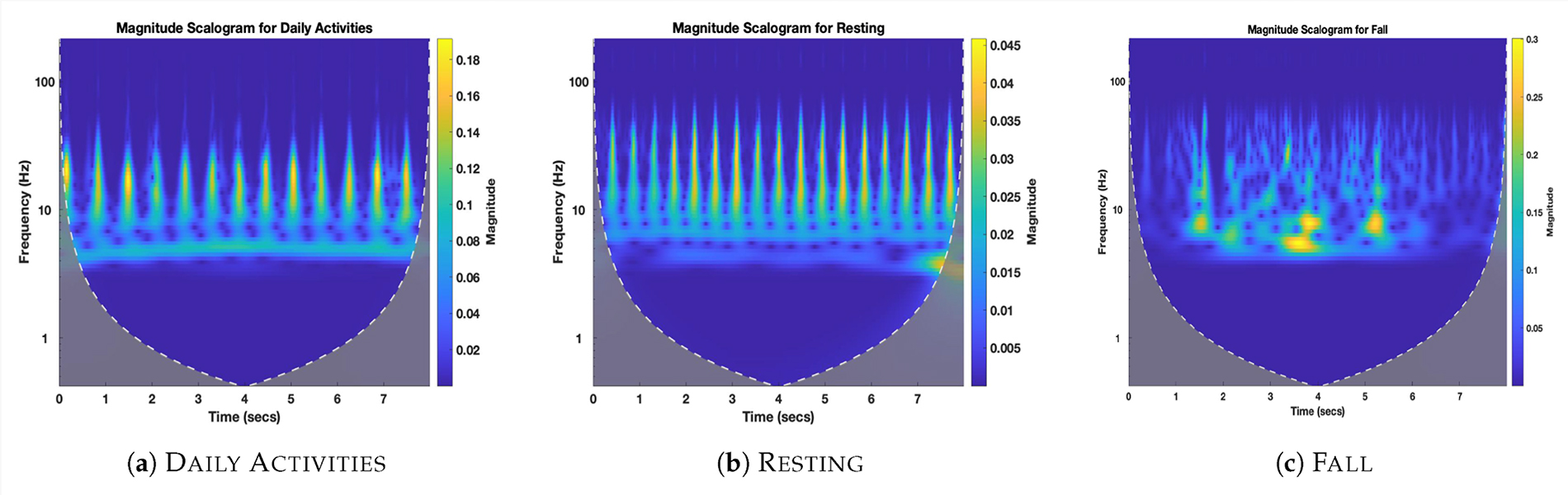
Our research focuses on extracting clinically meaningful insights from electrocardiogram ECG signals using state of the art deep learning methods. The group develops models for ECG-based classification and forecasting to support early diagnosis, monitoring, and decision-making in real-world healthcare settings. In addition, our work includes robust fall-detection and human activity system that leverage physiological and temporal patterns to improve patient safety and preventive care.
Contact person: Dr. Fatima Butt
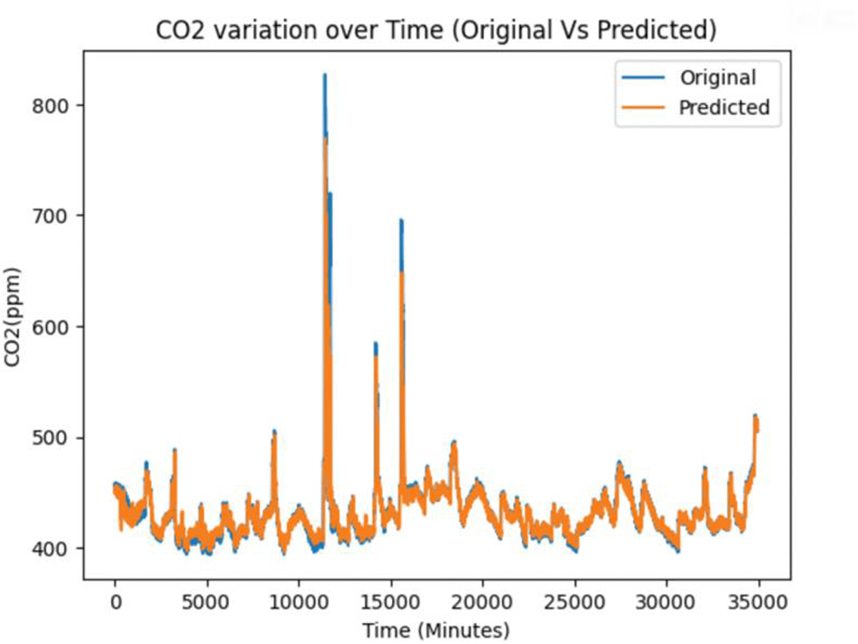
One of the project under Environmental Data Science research applies advanced data-driven models to monitor and analyze indoor air quality in smart educational environments. We develop intelligent systems for detecting indoor air pollution using sensor data, enabling real-time assessment of environmental conditions. This work supports healthier, more sustainable learning spaces by informing timely interventions and data-informed building management. This work has been done in collaboration with our international collaborators at University of Cádiz, Spain.
Contact person: Dr. Fatima Butt
- VACUUMSCHMELZE GmbH: Surface inspection of specular materials is challenging because traditional image-processing techniques often fail to provide reliable defect detection. The goal of this project is to develop an AI-based method for classifying surface defects using multi-channel deflectometry data.
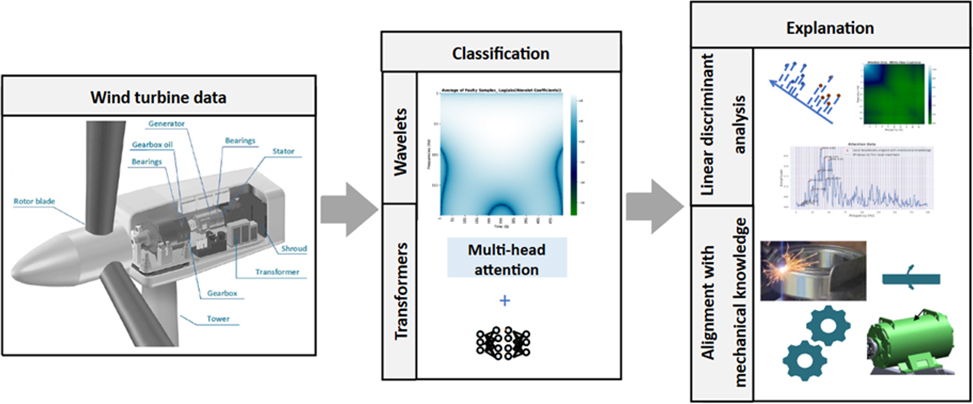
- Wind turbine: In this project, we have proposed a classification framework for fault detection based on signal frequency content using transformer models. Furthermore, the results were interpreted through explainable AI methods that identify faulty frequencies. The framework was evaluated on three real-world wind turbine datasets, achieving promising results.
Contact persons: Anahita Farhang Ghahfarokhi, Anna Binder
- Slide 1 INDAS at the Workshop on Statistics, Machine Learning and Applications 2025
- Slide 2 INDAS at the Universidad Complutense de Madrid for a research exchange, 2026
- Slide 3 INDAS at the 2023 IEEE International Workshop on Metrology for Industry 4.0 & IoT
- Slide 4 INDAS at 5th ICMIAM Conference, Manipal, India, December 2024

INDAS at the Workshop on Statistics, Machine Learning and Applications 2025

INDAS at the Universidad Complutense de Madrid for a research exchange, 2026

INDAS at the 2023 IEEE International Workshop on Metrology for Industry 4.0 & IoT
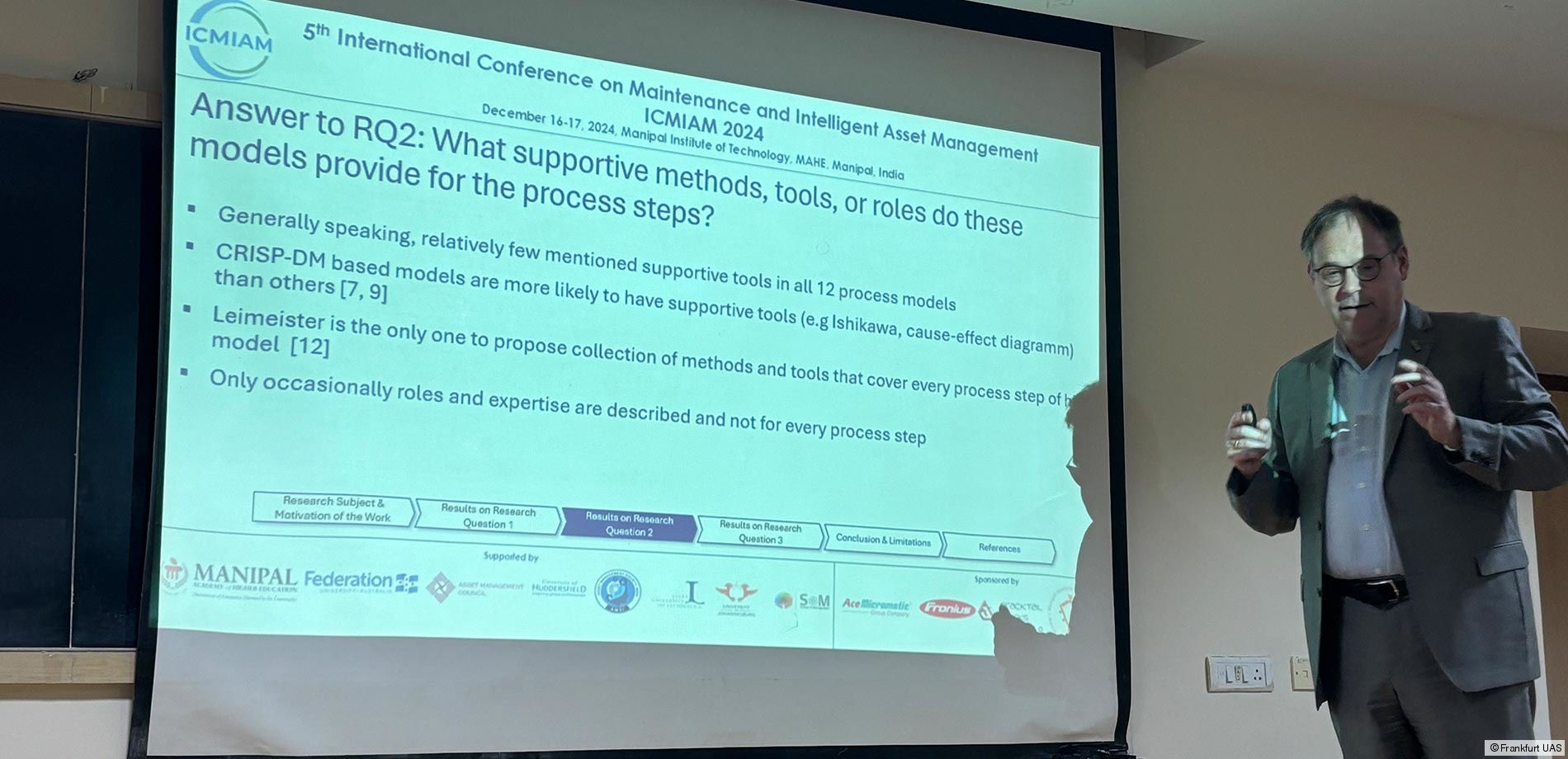
INDAS at 5th ICMIAM Conference, Manipal, India, December 2024
Publications
Binder de Serdio, A., Mishra, R., Stegelmeyer, D. et al. Process models for the development of data-driven industrial services: insights from a systematic literature review and research agenda. International Journal of System Assurance Engineering and Management (2026), doi: 10.1007/s13198-026-03165-4
- Anahita Farhang Ghahfarokhi, Jörg Schäfer, Matthias F. Wagner, and Bernabé Dorronsoro, "Explainable artificial intelligence for time series using attention mechanism: Application to wind turbine fault detection" IEEE Access, 13:180613–180631, 2025, doi: 10.1109/ACCESS.2025.3621003
- Jörg Schäfer, Ahmed Achour, and Fatima Sajid Butt. "Automatic Feature Extraction for ECG Classification Using Signature Methods". In Eleventh Spanish-German Symposium on Applied Compu- ter Science (SGSOACS 2025), Communications in Computer and Information Science (CCIS). Springer Nature, 7 2025.
- Fatima Sajid Butt, C. Khatri, A. Nighot, Matthias Wagner)" Temporal Fusion Transformers for Forecasting ECG Signals". In Eleventh Spanish-German Symposium on Applied Compu- ter Science (SGSOACS 2025), Communications in Computer and Information Science (CCIS). Springer Nature, 7 2025.
- Jesús Rosa-Bilbao, Fatima Sajid Butt, David Merkl, Matthias F. Wagner, Jörg Schäfer, and Juan Boubeta-Puig. "Iot-based indoor air quality management system for intelligent education environments", IEEE Internet of Things Journal, pages 1–1, 2025. doi: 10.1109/JIOT.2025.3539886
Binder de Serdio, A M, Stegelmeyer, D, Butt, F S (2024). „Early Indicators of Project Abandonment in Industry-Academia Collaborations: Developing an Assessment Framework for Industrial Data Science Projects.” In Proceedings of the 10th Spanish-German Symposium on Applied Computer Science (SGSOACS 2024), Cádiz, Spain.
https://zenodo.org/doi/10.5281/zenodo.11916306
- F. S. Butt, J. Schäfer, M. F. Wagner, D. Stegelmeyer and D. Gómez-Ullarte Oteiza. „Application of CRISP-DM and DMME to a Case Study of Condition Monitoring of Lens Coating Machines” in 2023 IEEE International Workshop on Metrology for Industry 4.0 & IoT (MetroInd4.0&IoT), Brescia, Italy, 2023, pp. 409-414 https://doi.org/10.1109/MetroInd4.0IoT57462.2023.10180178
- P. Weber „Anti-reflex coating and process control”, MAFO Ophtalmic Labs & Industry, Vol. 5-2203, p.20-25 https://issuu.com/eyepressfachmedien/docs/mafo_2305/20
- F. S. Butt, M. F. Wagner, J. Schäfer, and D. G. Ullate. "Towards Automated Feature Extraction For Deep Learning Classification of Electrocardiogram Signals," in IEEE Access, vol. 10, S. 118601-118616, 2022, doi: 10.1109/ACCESS.2022.3220670.
- F. S. Butt, M. F. Wagner, J. Schäfer, and D. G. Ullate. "Time series Analysis using Machine Learning Techniques: Medical and Industrial Applications", Actas de las II Jornadas de Investigación Predoctoral en Ingeniería Informática (JIPII 2022). June 2022. ISBN 978-84-89867-48-2. [Online]. Available: https://rodin.uca.es/handle/10498/27607.
- Jörg Schäfer, Baldev Raj Barrsiwal, Muyassar Kokhkharova, Hannan Adil, and Jens Liebehenschel. "Human activity recognition using csi information with nexmon". Angewandte Wissenschaften, 11(19), 2021, special issue "SI: Sensor-Based Human Activity Recognition in Real-World Scenarios", 2021, doi: 10.3390/app11198860.
- Baldev Raj Barrsiwal, Jens Liebehenschel, and Jörg Schäfer. "Ml approaches for human activity recognition with low-cost hardware". In Embedded Software Engineering Kongress 2021 digital, Nov 2021.
- Fatima Sajid Butt, Luigi LaBlunda, Matthias F. Wagner, Jörg Schäfer, Inmaculada Medina-Bulo, and David Gómez-Ullate. "Fall detection from electrocardiogram (ECG) signals and classification by deep transfer learning". Information, 2, 12, Sonderausgabe "SI: Computer Vision for Biomedical Image Applications", 2021, doi: 10.3390/info12020063.
Research Projects

Results:
1.) ML models enabled much-prolonged cleaning intervals saving time and money
2.) A better understanding of critical process parameters was achieved
Contact person: Fatima Butt, Anahita Farhang

Results:
- The lifting device had to be calibrated by the operator with a proper counterweight
- Obtained actuator data from Beckhoff CX9020 Ethernet control system for different configurations during training
- Thus, collected data proper and improper configurations
- Machine Learning Goal: predict configuration from sensor data and trigger warning in case of improper configuration
Contact Person: Jörg Schäfer
Contact